Fixing Factory Issues
There are a couple problems I had on my boat, which did not prevent the system from operating, but it was far from ideal.
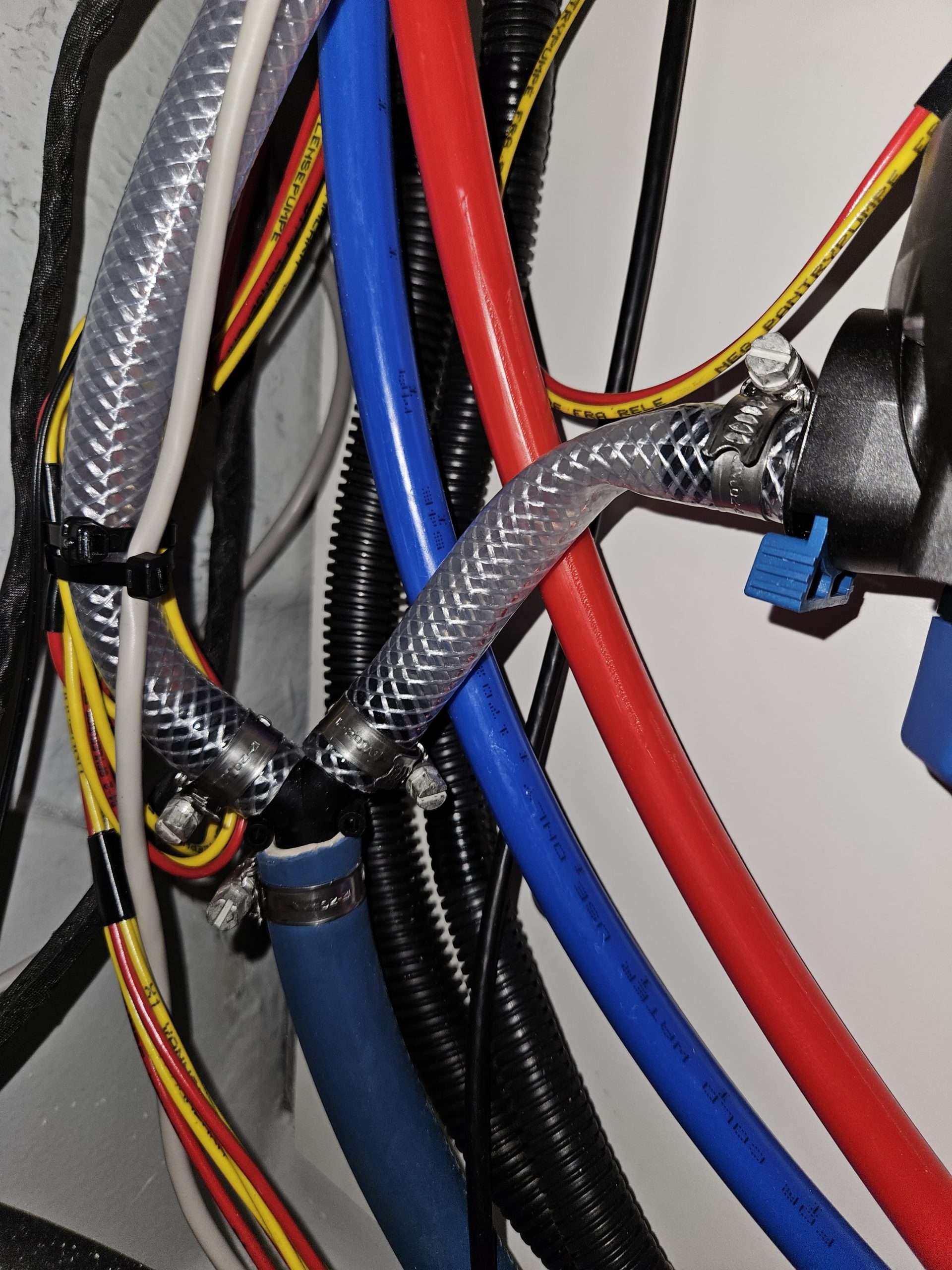
First there was a kinked hose on the inlet to the water pump. It was not completely blocking the flow, but who knows for how long.
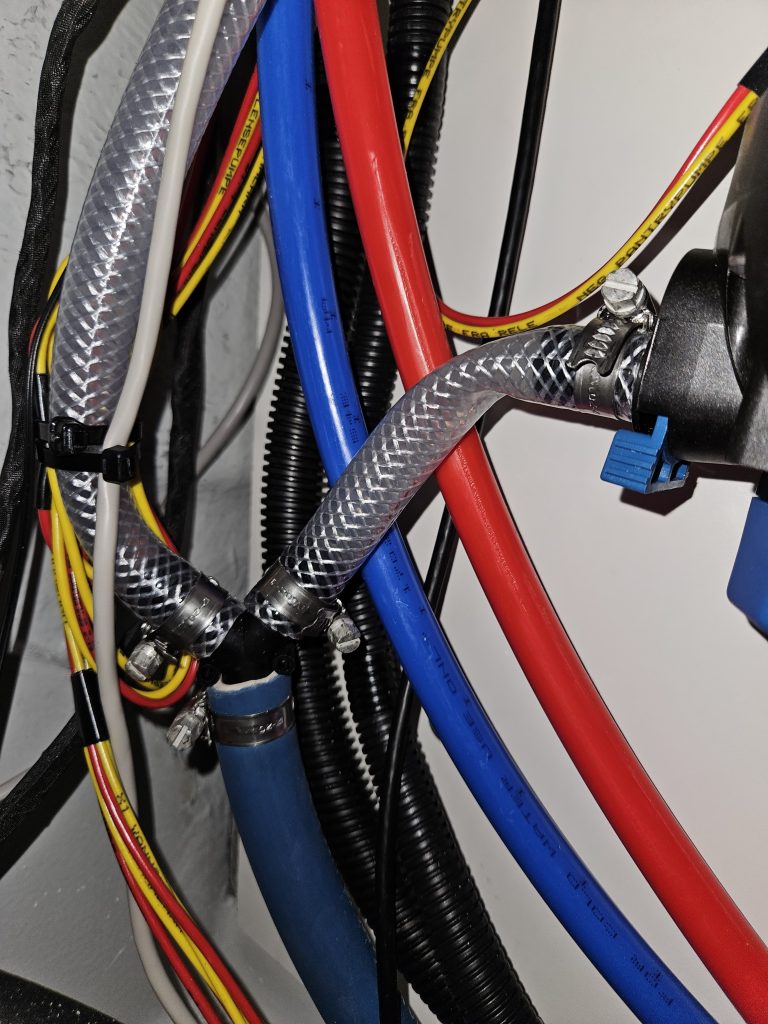
Fix is simple, buy some 13mm ID longer hose and replace it…
The next issue was that the pump was insanely loud. And the reason is actually not the pump itself. The pump has very nicely thought out rubber mounts, but the factory for some reason mounted the accumulator tank next to it and used a solid brass fitting to connect those two together!
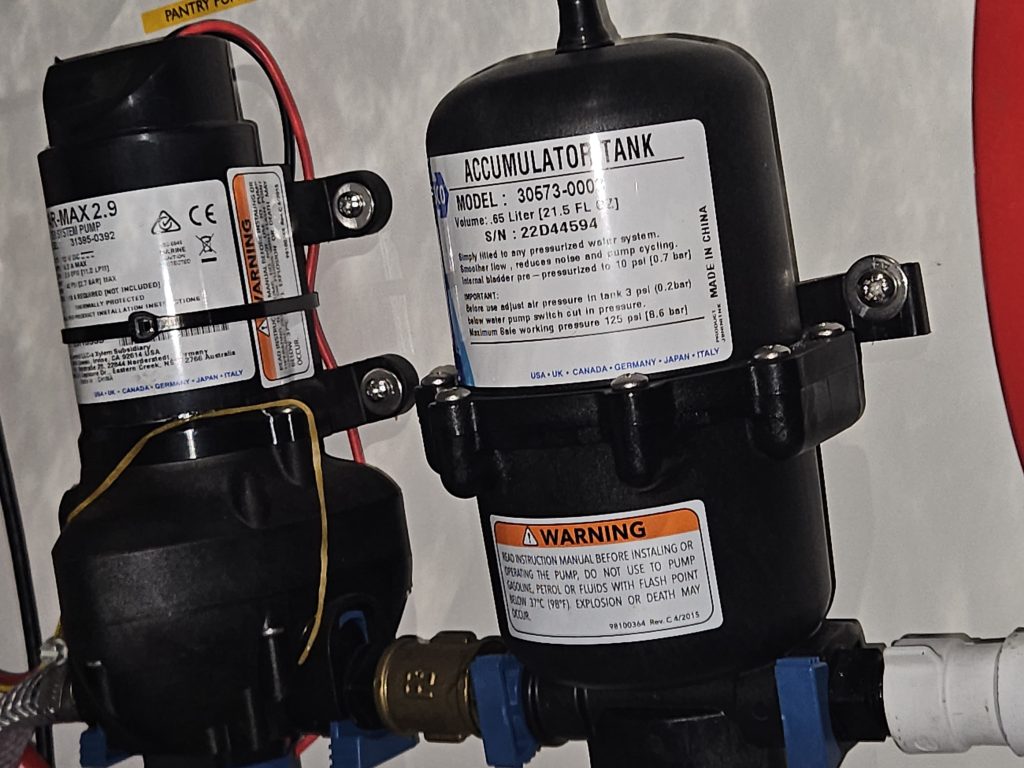
The accumulator tank of course does not have any kind of rubber mount, it’s one solid piece of plastic. So every time the pump turned on it was like a jackhammer through the entire boat. Moving the accumulator tank a little and fitting some hose in between makes the pump at least 2x quieter if not more. You can only really hear it in the center cabin.
The final issue was with the water pressure fluctuating. The accumulator tank was not pre-set properly. When I checked, I could not see any pressure at all in there, it’s supposed to be 0.7 bar from factory, but it was pretty much at atmospheric pressure when there was no pressure in the water system.
Fixing that made the pressure jump less when the pump turned on and off.
Improving the system further
When buying the boat I asked the factory to fit a water filter. Of course I did not think about elaborating what water filter it should be, and they fitted one of these:
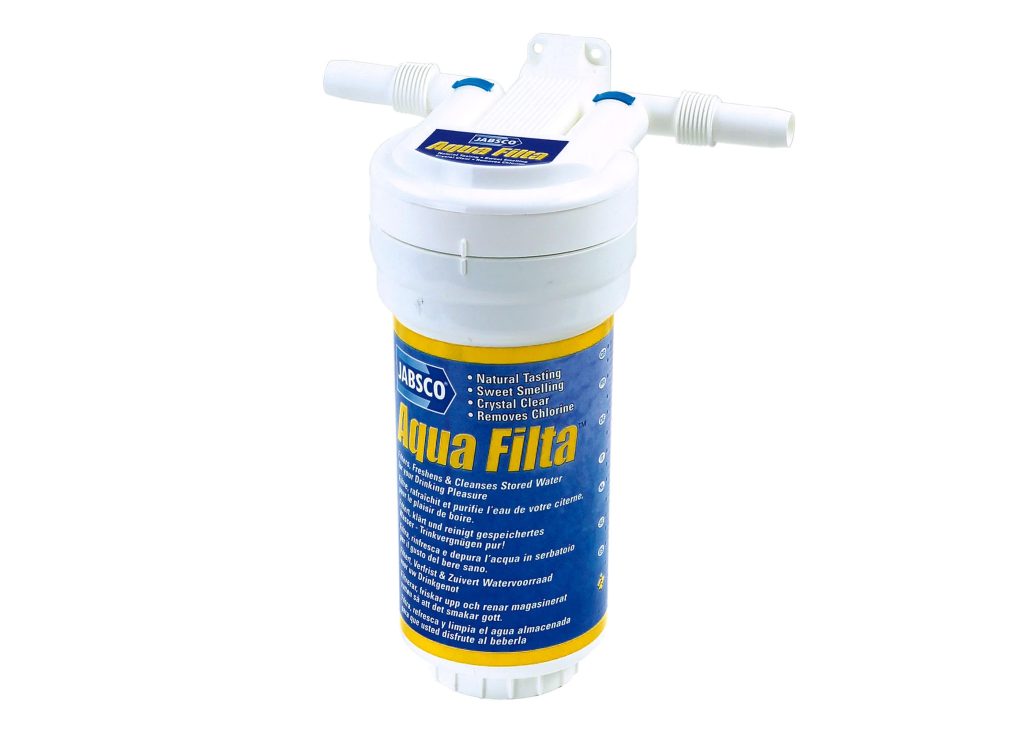
The issue with it is that it’s a carbon granule filter. Meaning it sucks up toxins and chemicals really well, but it does absolutely nothing to fine particles present in the water, those pass right through. Filtering fine particles was actually the main reason I wanted a filter – prevent the taps and shower from getting clogged by hard or bad water, because you never know what you are getting at the marina.
It’s not a bad filter by any means, the flow rate is 840 L/h, which is very good for a filter of this type and size, the fittings swivel, and if you don’t want to buy an overpriced refill cartridge you can just replace the carbon granules inside.
Secondly even with the correctly set accumulator tank I did not like how the Jabsco pump operated, especially in the shower, as you’d still get pressure pulsation.
Shopping List
Larger Items
I decided to fit a PWM controlled pump, the Marco UP3/E:
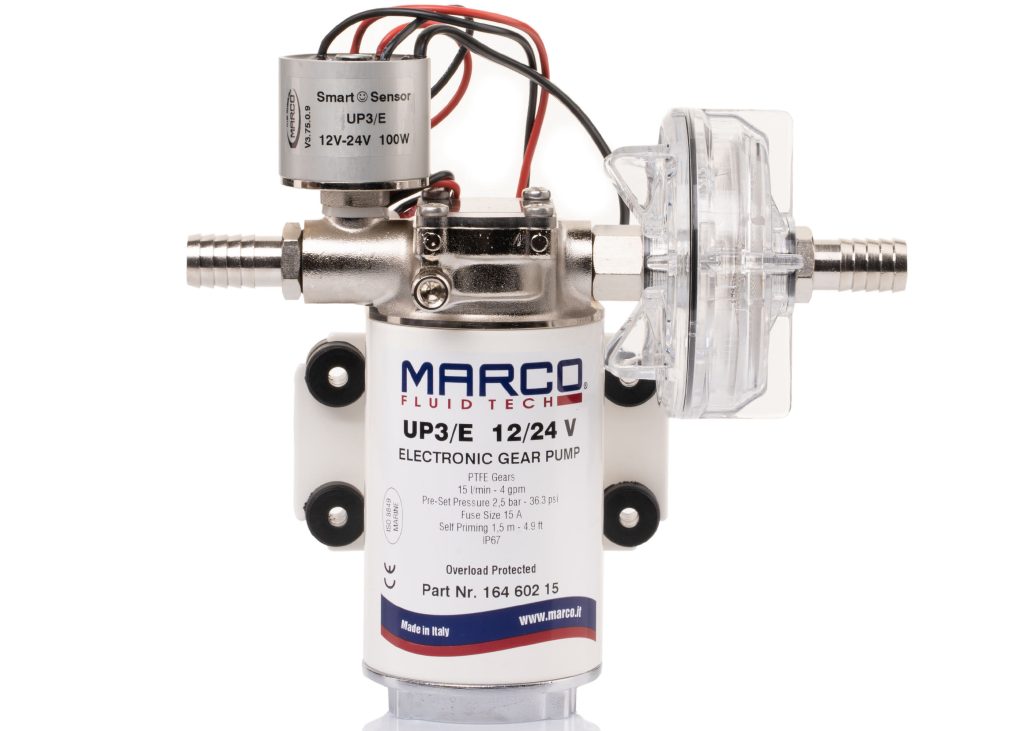
In addition to having variable flow control it also comes with an integrated mesh filter for large particles, and can also be fitted in any direction.
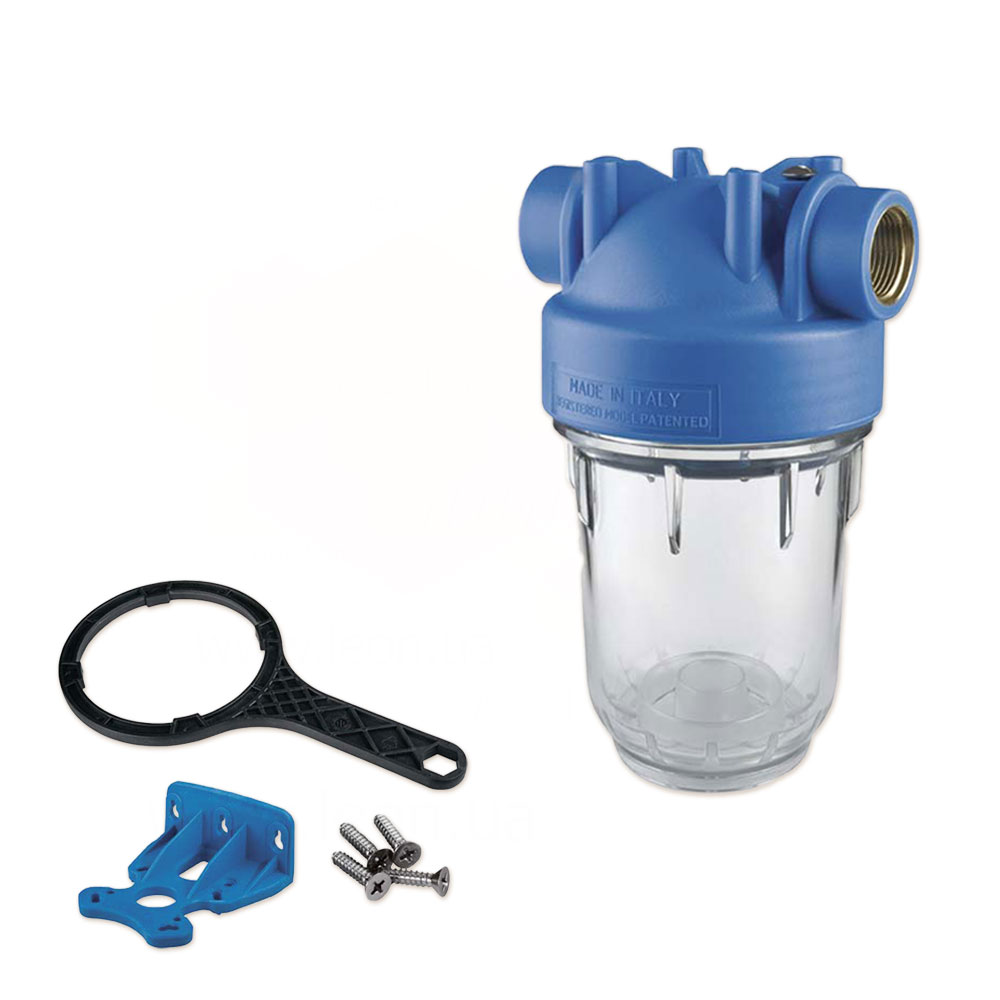
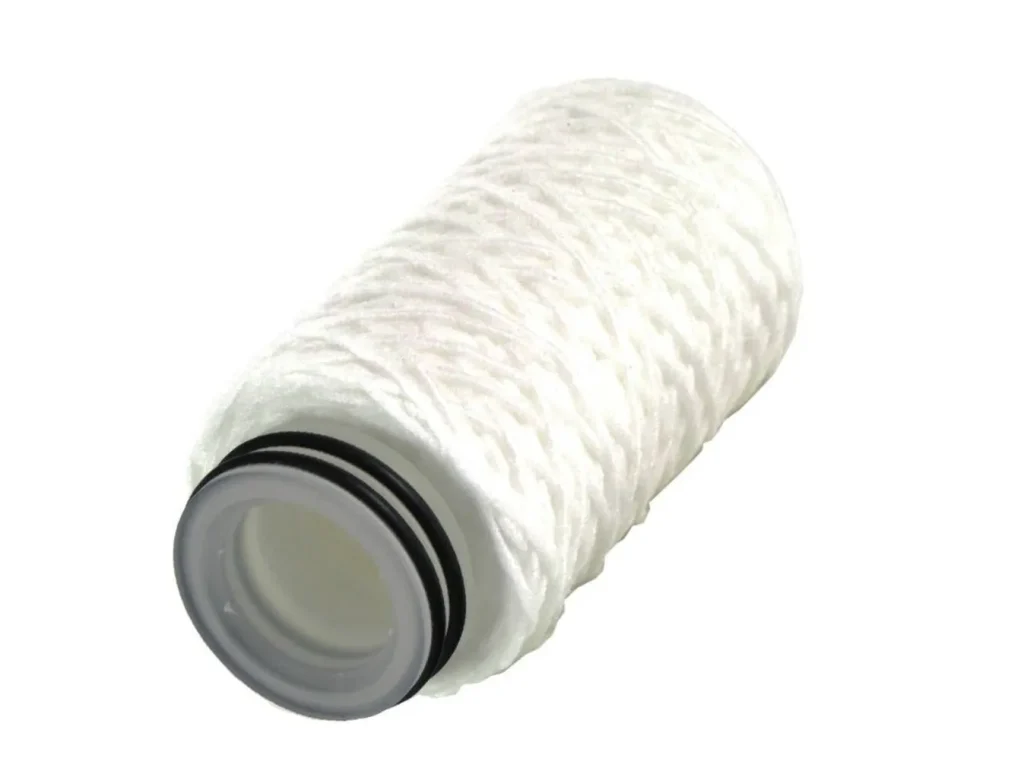
To take care of the smaller particles, I bought an Atlas Filtri DP 5″ kit with a 25 micron FA BX filter. It has a flow rate of 1000L/h and is well matched to the 900L/h pump:
Interconnects
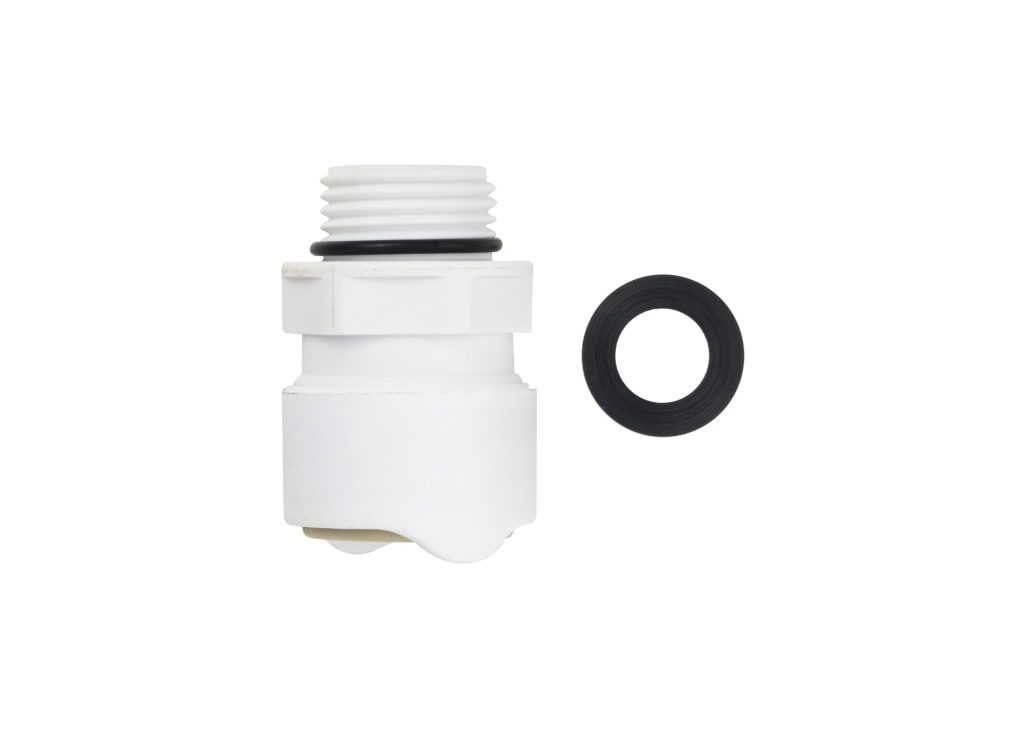
The factory uses the Whale quick connect boat system. I think it works great: seals well with O-rings and is quite secure, easy to assemble and disassemble. You can find all the parts online at SVB.
You need some Whale adapters that convert 1/2″ to the Whale system for the Atlas Filtri filter:
Additionally to remove the brass fitting between the pump and the accumulator tank two more adapters are needed:
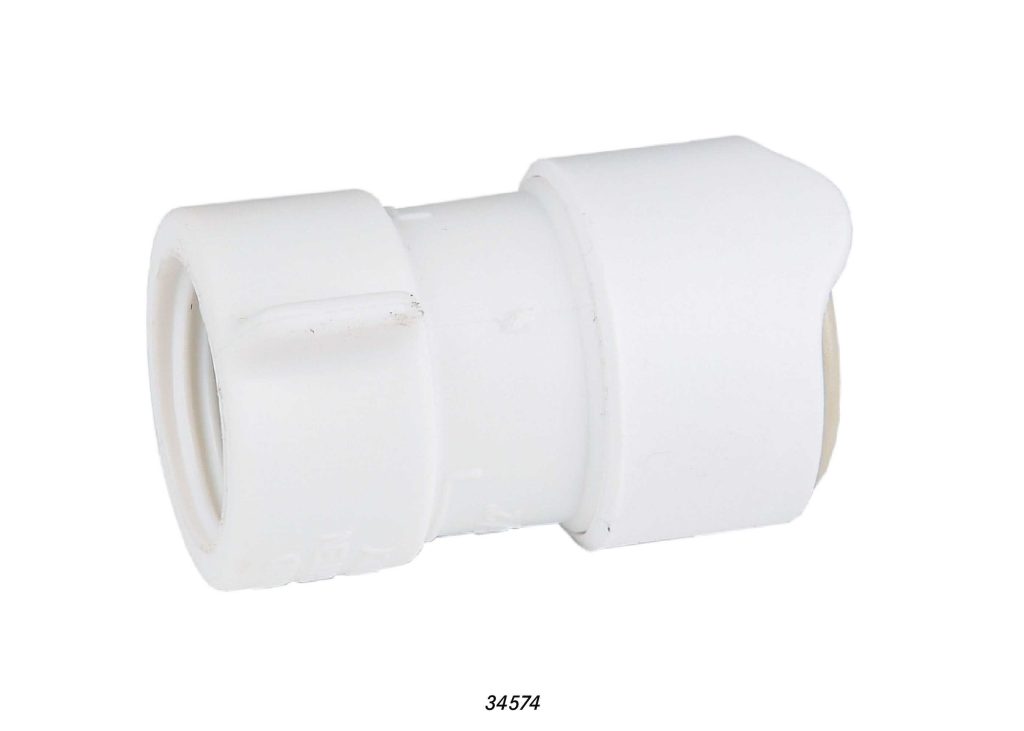
If you did not have a Jabsco Aqua Filta from factory, and want to fit one then you can get 4 of these, just do not over tighten them…
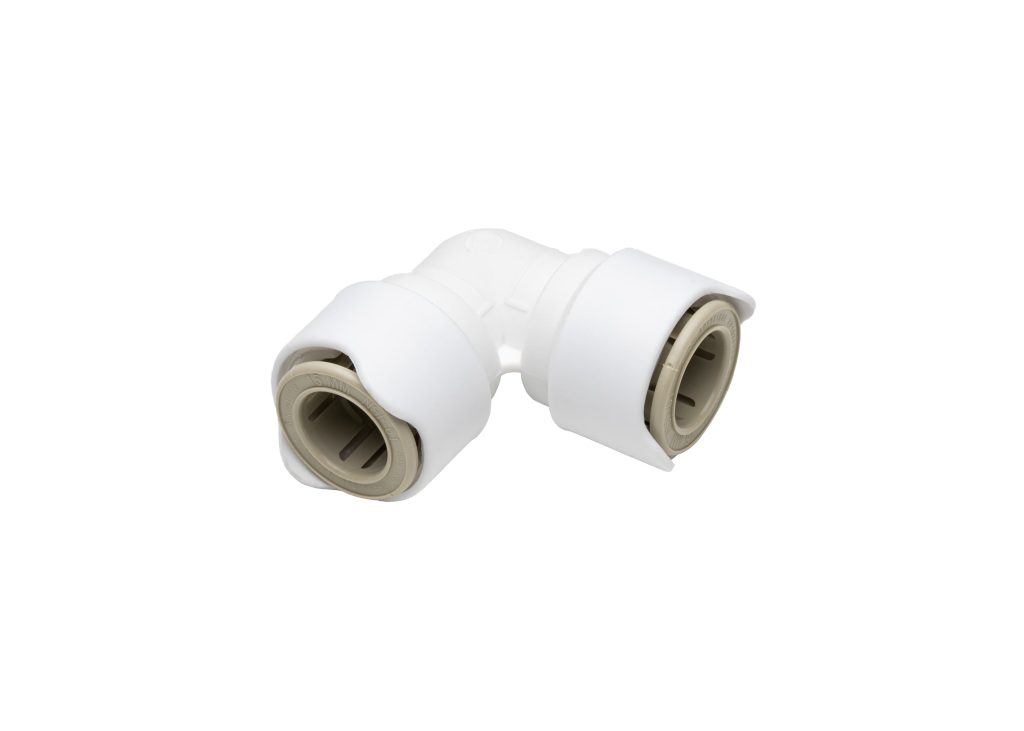
Apart from that it is a good idea to buy at least 1 meter of spare pipe and a few 90 degree elbows:
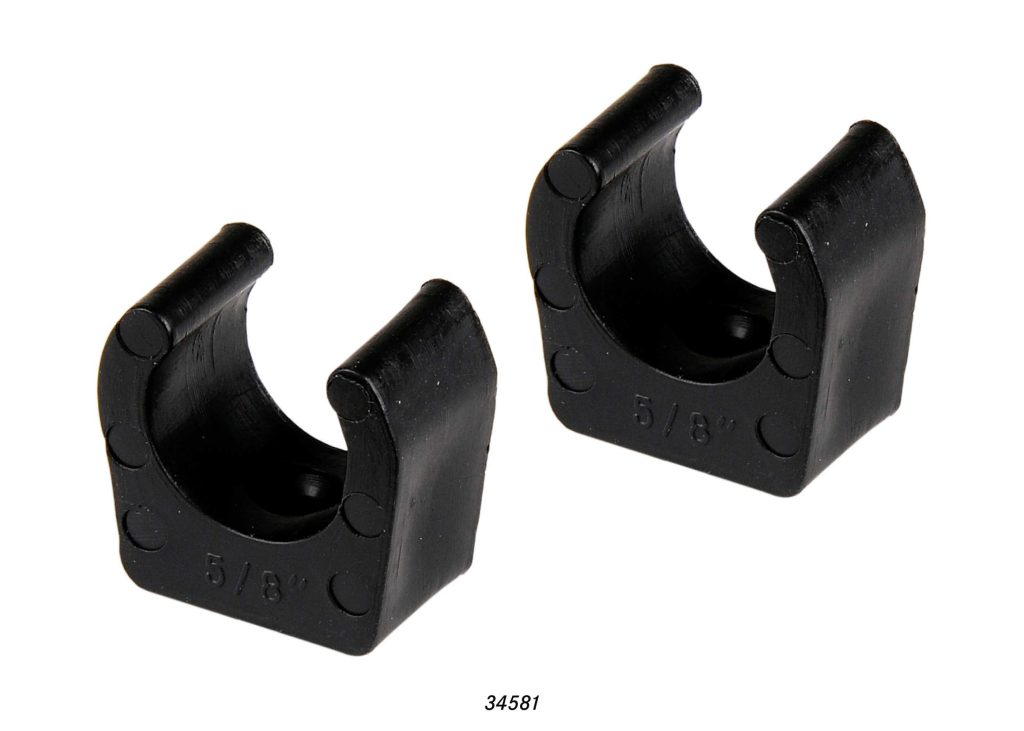
You can also get some of these clips at the same place to make it more tidy:
From brass fittings, you will need:
- A 3/8″ to 1/2″ adapter (both with external thread) for the Marco pump (it has a barbed outlet otherwise).
- Two 90 degree 1/2″ elbows, if you want to fit the Aqua Filta as well.
- My filter kit had 1″ outlets, so I also got 1″ to 1/2″ reducer.
Additionally you will need PTFE tape, a pipe cutter, and if you want thread sealant.
Putting It All Together
One picture says more than a thousand words, so here is how I made it all fit:
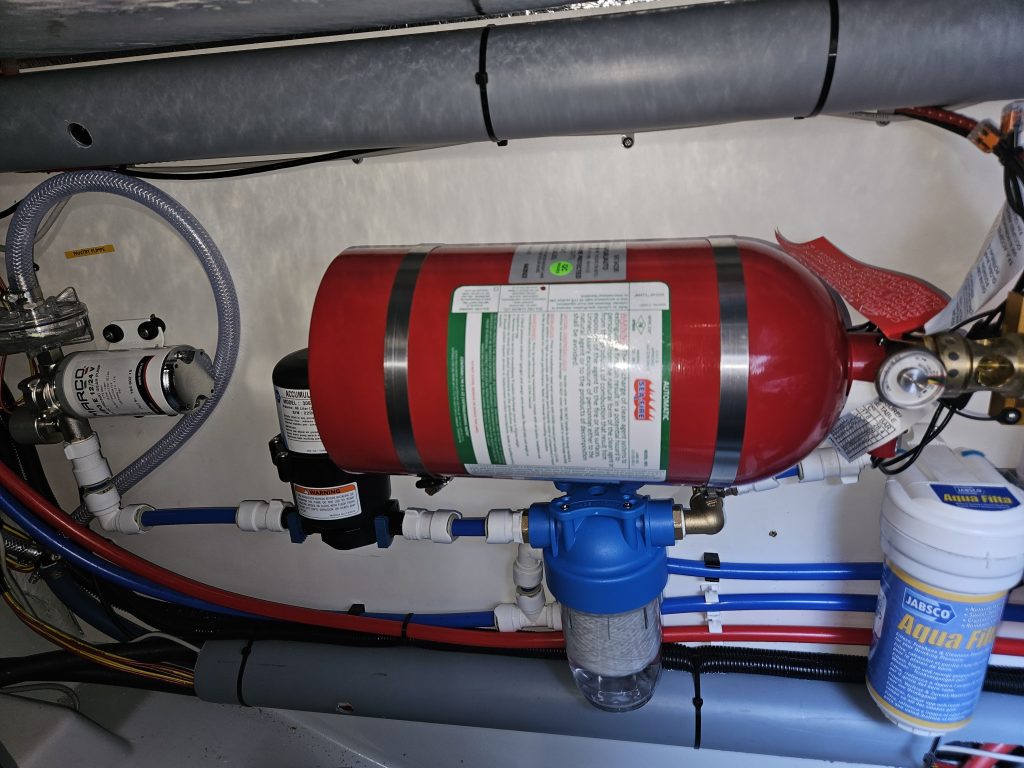
Just to the right side of the Aqua Filta is the expansion tank, so unless you want to move that then this is all the room you have to play with.
The first issue is that the Aqua Filta and the Atlas Filtri filter have the water outlet at a different distance from the wall when mounted. To compensate for that two 90 degree elbows are needed:
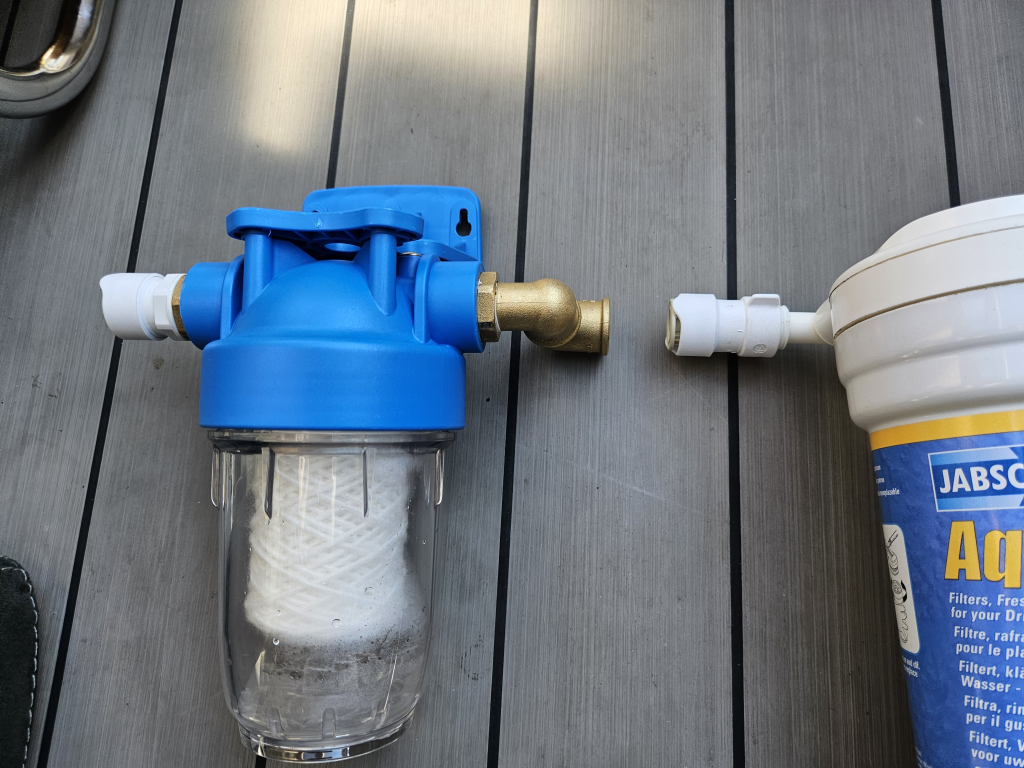
The threads on the Aqua Filta are very flimsy, so when screwing on the Whale adapter you can not tighten it much and you can not put any sideways tension on it either, as the O-ring will start leaking. It has to be pretty much straight on.
Make sure you pack enough PTFE tape in (on the brass connections without O-rings), as disassembling the stuff is a PITA if it does not seal. The factory used thread sealant everywhere – this can also reduce the likelihood of a leak.
The Atlas Filtri filter has to be mounted on the farthest holes possible from the wall, otherwise you can’t unscrew it as the sewer pipe (that’s used as a cable guard) is in the way, and the Aqua Filta has to be mounted a little higher for the same reason.
As a tip – the fittings can be rotated in any direction on the Aqua Filta, so you can use it as a 90 degree elbow.
The electrical connection to the original pump is done using Wago fittings, so it is plug and play. The factory fuse is also sufficient.
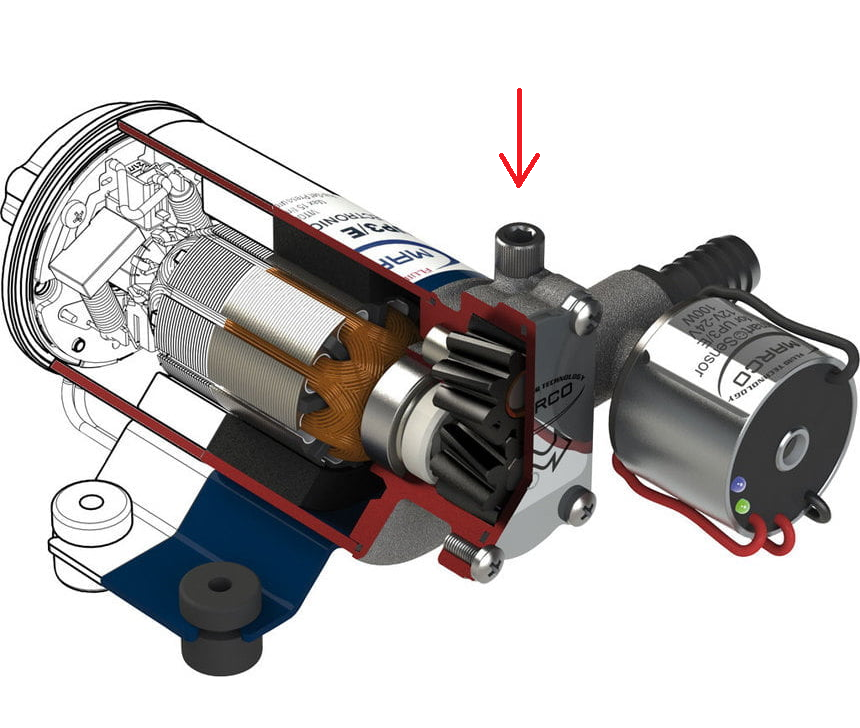
When running the system for the first time there is a small bleed screw on the Marco UP3/E. This should be opened until the pump fills with water, after that it can be closed.
The Result
I now have a large particle and 25 micron filter catching any dirt or grime. Refills for the filters are cheap and should be done once per season (in the Aqua Filta it is possible to change just the granules by using Aquarium Carbon).
On the sound side – The Marco pump produces a different sound because it is a gear pump and the Jabsco Par Max is a diaphragm pump. It is by itself quieter than the Jabsco Par Max, but it’s mounts are not as good and in the center cabin the noise is roughly the same as when you replace the metal fitting between the Jabsco and the accumulator with a hose. It’s more of a whirring sound than a jackhammer sound.
The flow is rock solid, it does not jump up and down at all. If you have the tap or shower opened just a little then the sound is also less as the pump is not stopping and starting all the time, but running slower and quieter to provide just the right amount of water flow.
Finally I now also don’t have a kinked hose in the system choking the pump, since I replaced it with a longer loop, and the inlet is in a different position.